
How much valuable research on insect breeding remains overlooked simply because it was published in a language other than English?
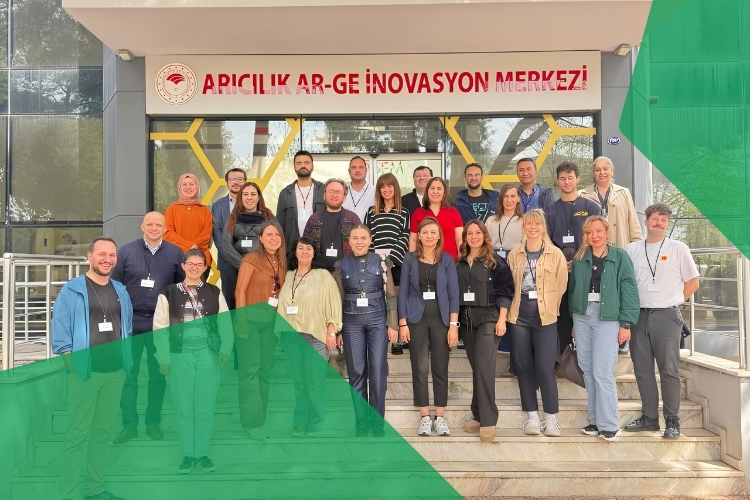
This question was at the centre of the joint Insect-IMP Working Group 7 (WG7) and Working Group 8 (WG8) workshop, held on 13–14 April 2026 in İzmir, Türkiye. Hosted by the Aegean Agricultural Research Institute, the meeting brought together researchers to explore scientific knowledge that is often difficult to access through international research databases.
Exploring insect science across languages
During the two-day workshop, participants worked in language groups to identify national and regional scientific databases, develop search terms in their native languages and explore existing research on insect genetics and selective breeding.
The work covered 15 languages and focused on four insect species:
- Bombyx mori – silkworm
- Dactylopius coccus – cochineal insect
- Hermetia illucens – black soldier fly
- Tenebrio molitor – yellow mealworm
The discussions revealed that non-English insect science is not simply a smaller version of English-language research. Valuable findings are often found in MSc and PhD theses, regional scientific journals and historical publications, particularly in countries with long traditions of insect rearing and breeding.
From workshop discussions to a Knowledge Hub
One of the main outcomes of the workshop was the development of the Insect-IMP Cross-Language Knowledge Hub, a resource designed to improve access to scientific knowledge published across different languages.
The Hub brings together national and regional databases, multilingual search terms, literature search results and a growing collection of scientific publications.
The collection currently includes 229 publication records in 14 languages, ranging from historical sericulture research to recent studies on insect genetics, breeding and production.
By making this information easier to discover and compare, the Knowledge Hub supports knowledge transfer across countries, languages and research communities.
Strengthening international collaboration
In addition to the scientific discussions and group work, participants visited the Aegean Agricultural Research Institute and had opportunities to exchange experiences and strengthen professional connections.
The workshop demonstrated the importance of looking beyond language barriers to make better use of existing scientific knowledge and support the development of sustainable insect breeding.